


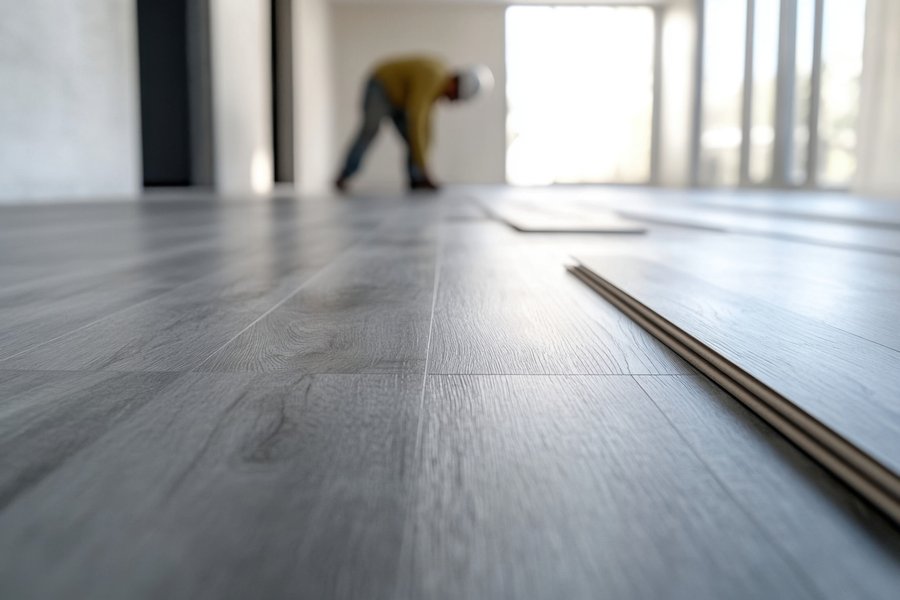
Installing laminate flooring can look deceptively simple. A few tools, a free weekend, and a stack of click lock planks can make DIY feel like the obvious choice. In a humid climate, however, laminate behaves very differently. Moisture in the air, in the subfloor, and even inside your home can quietly undermine an installation that looks perfect on day one.
For homeowners in Florida and other high humidity regions, the real question is not whether laminate can be installed yourself, but whether it should be. Understanding the hidden risks can help you avoid costly repairs, warranty issues, and long term damage that often appear months after installation.
Laminate Installation Risks In Humid Climates
Humidity changes the rules of laminate installation. Before comparing DIY and professional work, it helps to understand why climate plays such a critical role.
Laminate flooring is engineered with layers that respond to moisture. When humidity rises, planks expand. When it drops, they contract. Managing that movement requires more than basic installation instructions.
Why Humid Climates Demand Extra Care
In dry regions, small installation errors may never surface. In humid areas, those same errors are amplified.
Common humidity related challenges include:
- Increased plank expansion that stresses locking systems
- Moisture vapour rising from concrete slabs
- Seasonal humidity swings that cause shifting and noise
These factors make climate specific expertise essential, especially when selecting products and planning layout. This is why understanding the construction and performance of modern laminate flooring options matters before installation decisions are made.
DIY Installation Risks That Are Easy To Miss
Many DIY laminate projects fail not because of effort, but because of skipped steps that are easy to underestimate.
Tip Box: Acclimation Is Not A Suggestion
Laminate planks must sit in your home long enough to adjust to indoor humidity and temperature. Rushing this step often leads to buckling weeks later, not immediately.
DIY installers often rely on manufacturer minimums rather than real indoor conditions. In humid climates, that difference can be costly.
Another frequently missed step is subfloor moisture testing. Surface dryness does not equal safe moisture levels. Without testing, laminate may be installed over a subfloor that slowly releases moisture upward, damaging the floor from below.
Finally, expansion gaps must be precise. Too small and the floor lifts. Too large and gaps appear. Professionals account for room size, layout, and climate, while DIY projects often treat expansion space as a one size fits all detail.
Comparing DIY Vs Professional Installation
To make the decision clearer, it helps to compare the two approaches side by side.
| Installation Aspect | DIY Approach | Professional Approach |
|---|---|---|
| Moisture Testing | Rarely performed | Standard practice |
| Acclimation Time | Often rushed | Climate based |
| Expansion Planning | Generic spacing | Room specific |
| Warranty Protection | Frequently voided | Properly documented |
Professional installation services focus on controlling moisture before, during, and after installation. This attention to detail is especially important in humid regions where laminate flooring failures are more common without expert handling.
Hidden Health And Air Quality Concerns
Moisture related laminate issues are not only cosmetic. When moisture becomes trapped beneath flooring, mould growth can occur without visible signs.
What You Cannot See Can Hurt Your Floor
Hidden moisture can affect indoor air quality and lead to odours or health concerns, especially in ground floor rooms and coastal homes.
For homeowners concerned about long term moisture exposure, exploring waterproof flooring alternatives designed for humid environments can be a smarter solution than traditional laminate.
The True Cost Of DIY Mistakes
DIY laminate installation often starts as a cost saving decision. In humid climates, mistakes rarely stay small.
Replacing swollen planks, repairing subfloors, or addressing mould issues typically costs far more than professional installation would have initially. Warranty claims may also be denied if installation guidelines were not followed precisely.
Professionals document moisture readings, acclimation conditions, and installation methods, providing protection that DIY projects rarely have.
Flooring Confidence Starts With The Right Guidance
We bring decades of hands on experience installing laminate and moisture resistant flooring in Florida homes, where humidity is a daily reality. We understand how climate, subfloors, and product selection work together to deliver floors that last.
If you are weighing DIY versus professional installation, a consultation can help you avoid costly surprises. Speak with us through our consultations and design services to get personalised guidance tailored to your home and climate.


